NOTES FROM THE SKY & OTHER MATERial
ongoing
an ongoing series of mixed media work on canvas created outside in conjunction with the seasonal elements on site, developed in situ for periods ranging from one to five years.
NOTES FROM THE AIR ….
… I borrowed the structure for this series’ title from John Ashbery’s Notes from the Air, a collection of his poetry published in 1974. The initial appeal came from a sympathetic response to the idea of note-taking. Registering, recording, charting are forms of bearing witness, a way of acknowledging this was here, this happened, and if I know anything about the motives that drive me to create any work it’s that they’re rooted in a desire to see and be seen, to witness and to be witnessed.
Notes, on a lighter note, can be book-length or sentence-short, scribbled, scratched, or typed, as intimate as a kiss or as impersonal as a shopping list, and it’s here, in the richly connotative notion of notey-ness that more concrete questions about my work take shape: what kind of notes are they, and what are they noting?
… Wisława Szymborska’s poem ‘Sky’
The second influence comes from thinking about Wisława Szymborska’s poem ‘Sky’, which invokes the sky both as an absence, ‘even the highest mountains/are no closer to the sky/than the deepest valleys’ and as a ‘grainy, gritty, liquid’ presence; by the end of the poem, it permeates everything like some sort of universal material: 'the sky is everywhere/ even in the dark beneath your skin’. But Szymborska keeps her divine, ur-medium tethered to gritty details of a material existence - ‘I eat the sky/I excrete the sky’ - and her influence was strongest here, drawing my attention back to the materiality of the pieces.
selected works
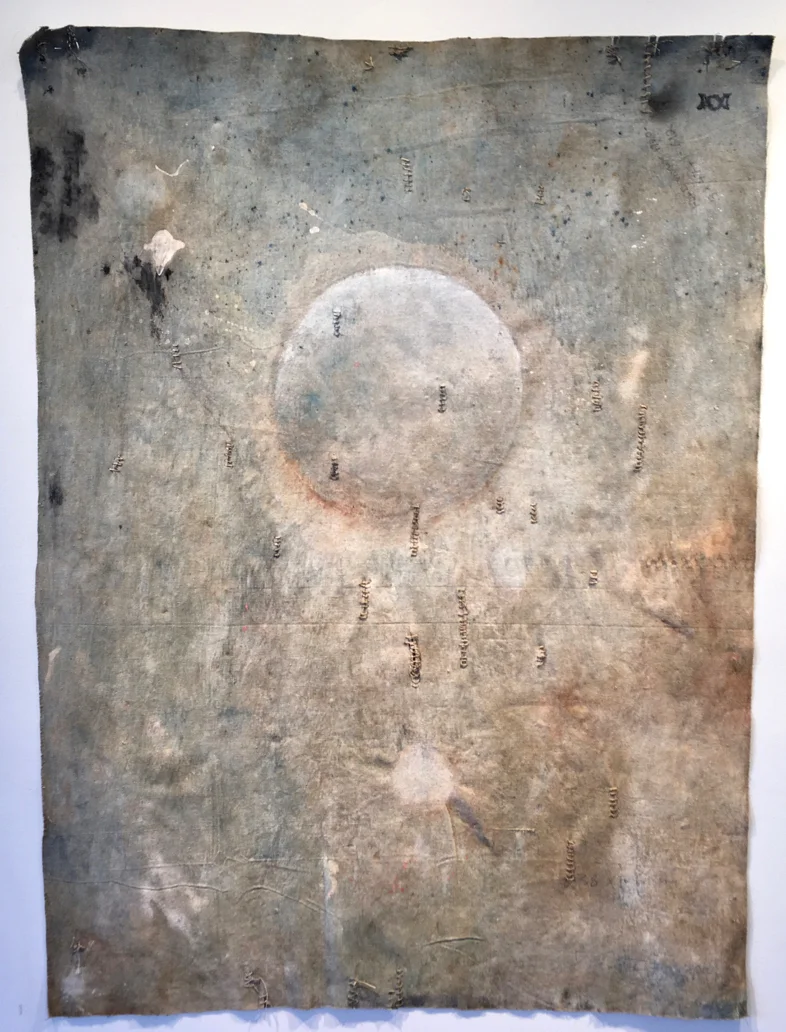
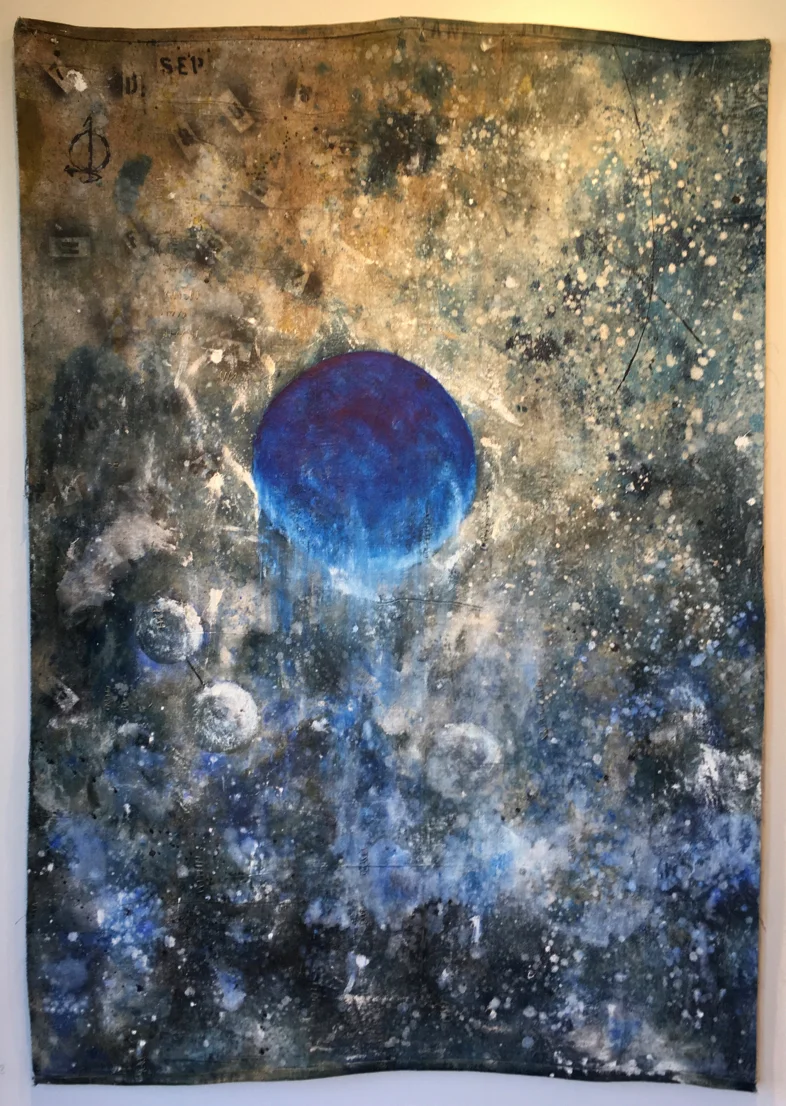


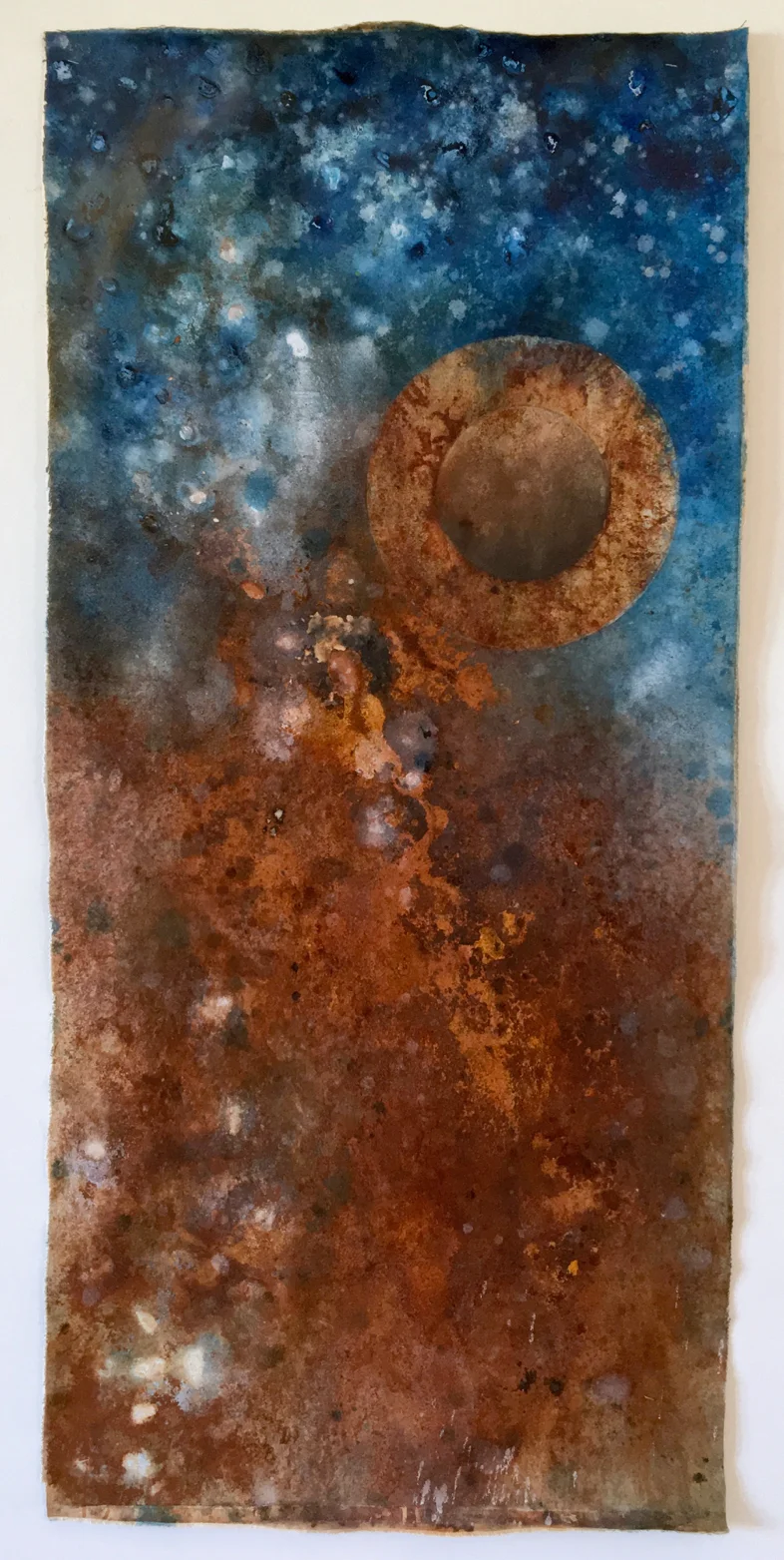
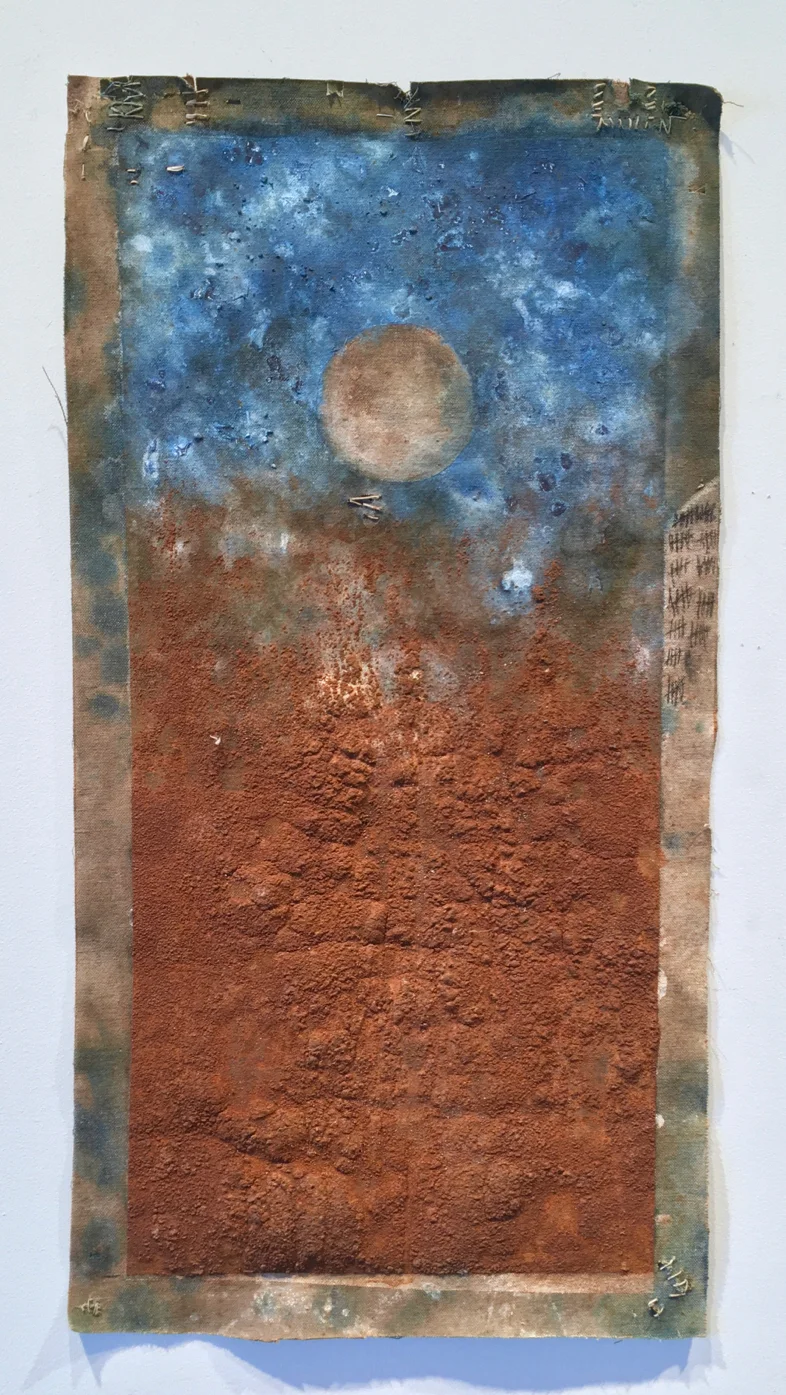
The works, then, are notes not just from the sky in the vague way they often depict a kind of ‘skyness’, or sometimes a celestial body ensconced within it; they’re also of the sky, left face up outside for months or years on end, made in conjunction with other materials - iron & salt, oil & water, to name a few.
Which is to say I hope to draw people’s attention to them also as objects, to their materiality - that, yes, this is a blotch of rust, a splash of ink, a pooling of water, inviting the viewer to discover their own ‘identifying’ features, as Szymborska’s narrator does by the end of the poem:
Division into sky and earth -- it’s not the proper way to contemplate this wholeness.
It simply lets me go on living
at a more exact address
where I can be reached promptly
If I’m sought. My identifying features
are rapture and despair.
For the full text of the poem, visit here.